Lake Santeetlah exists because aluminum takes a lot of electricity. In the early 1900s the Aluminum Company of America, Alcoa, came to the Little Tennessee River valley looking for falling water to power its smelters in Tennessee. Its subsidiary, the Tallassee Power Company (later Tapoco), set out to dam the river system piece by piece. Santeetlah, finished in 1928 on the Cheoah River, was the storage reservoir of the system, the one that held water back so the power dams downstream could run on schedule.
That origin explains the lake's character today. It was engineered, not landscaped, and the paperwork still runs it: water levels, releases, and shoreline rules all descend from a hydroelectric project that happens to be beautiful.
Why Alcoa came to Graham County
Smelting aluminum ore into metal consumes enormous amounts of power, and in 1910 the cheapest power was a dam. Alcoa began developing the Little Tennessee watershed that year and bought the Tallassee Power Company in 1913. The plan was a staircase: dams on the main river generating power, and a tributary reservoir to store water and even out the flow between wet seasons and dry ones.
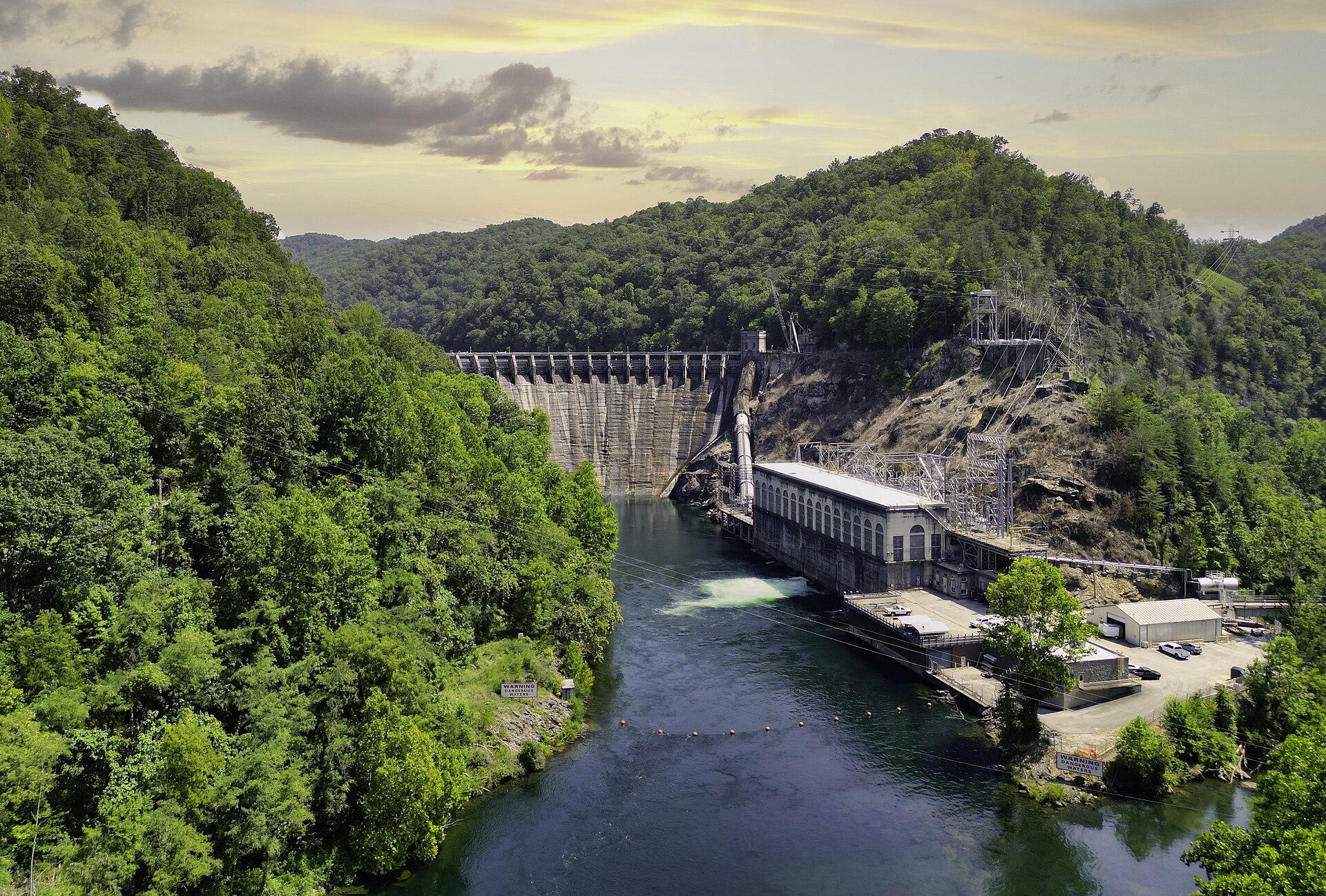
The first big piece was Cheoah Dam on the Little Tennessee, completed in 1919. At 225 feet, it was the highest overflow dam in the world at the time, and its turbines were the largest ever built. Cheoah generated the power. What it could not do was guarantee the river. Its output rose and fell with the weather, which is where the Cheoah River, and Santeetlah, came in.
Building Santeetlah Dam, 1925 to 1928
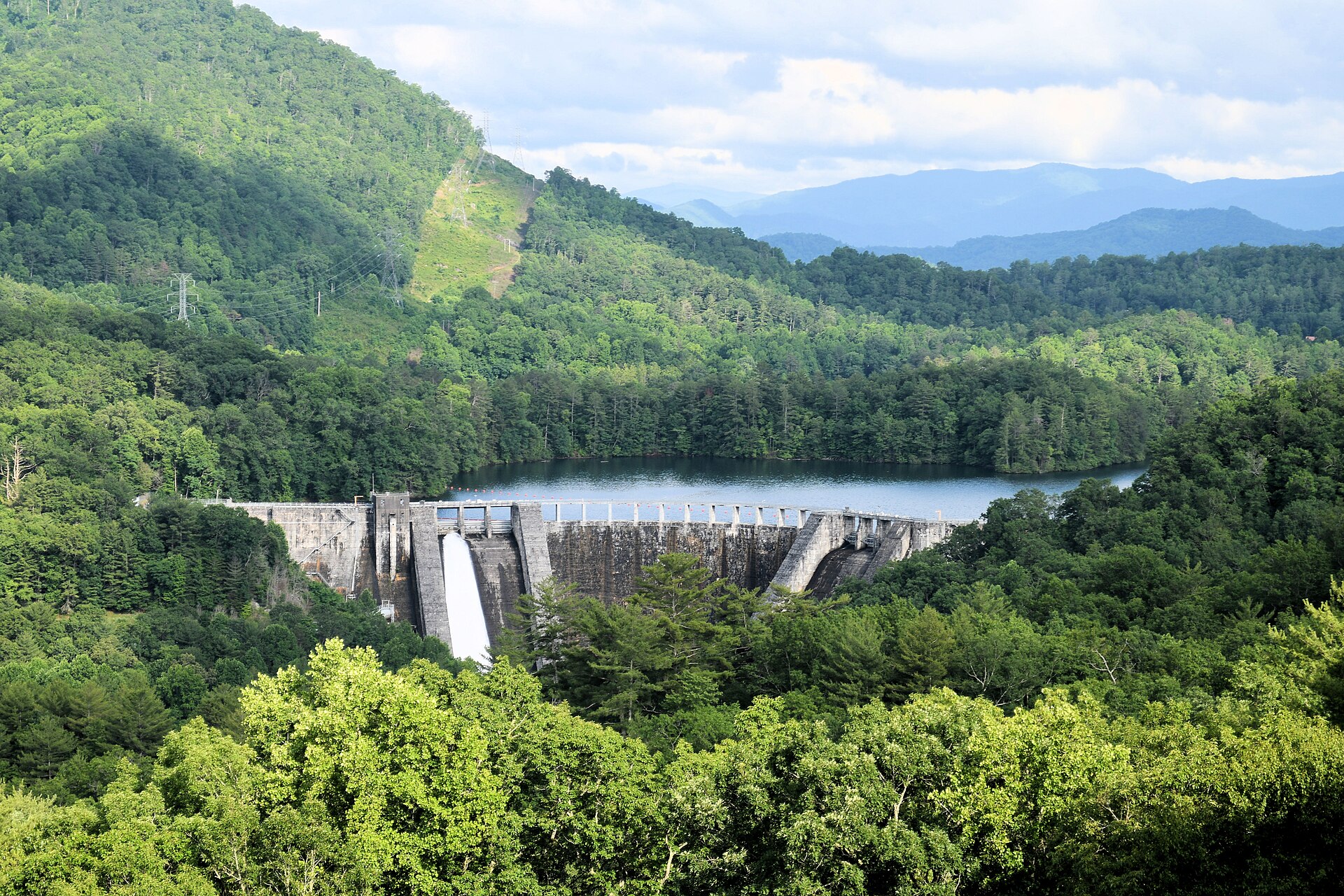
Construction began in 1925 at a site on the Cheoah River, nine miles up from where it meets the Little Tennessee. The dam that rose there is a concrete arch, 1,054 feet long and a little over 200 feet high, with a spillway capacity of 50,000 cubic feet per second. It was one of the first structures built using vibratory methods to control the quality of the concrete as it was poured, new technology at the time, and the kind of detail that mattered when your dam had to hold back a mountain river for a century.
The project, dam, tunnel, and powerhouse together, was completed in 1928. The major elements of the Santeetlah development were listed on the National Register of Historic Places in 2004, which is a formal way of saying the engineering held up, historically as well as physically.
The strange part: there is no powerhouse at the dam
Stand at Santeetlah Dam and you will not find generators. A gatehouse on top of the dam sends the water into a conduit instead: about a mile of steel pipe and roughly four miles of concrete-lined tunnel bored through the ridge, dropping the water some 600 feet to a powerhouse at Rhymer's Ferry, five miles away on the Little Tennessee River, above Cheoah Dam. The Santeetlah powerhouse there is rated at about 49 megawatts.
The arrangement did two jobs at once. Dropping the water 600 feet through turbines generated power, and delivering the Cheoah's flow into the Little Tennessee above Cheoah Dam meant the downstream plant got steadier water. The cost of the scheme is visible today: the stretch of the Cheoah River below Santeetlah Dam runs mostly dry, fed only by tributaries and spill, which is why that riverbed now fills only on scheduled whitewater release days.
What was there before
Before 1928 the lake bed was the Cheoah River valley: a free-running mountain river through the bottomland of one of the most rugged counties in North Carolina. The Cherokee were here long before the power companies. Cheoah is a Cherokee word meaning "otter," and Santeetlah itself derives from a Cherokee word for "blue waters," the name the lake now carries. The flooding took the valley floor, the low ground along the river, and left the steep forested slopes that now form the shoreline.
The handoff, and the lake today
Tapoco operated the Santeetlah development for most of a century. In 2012 Alcoa's power arm was sold to Brookfield, becoming Brookfield Smoky Mountain Hydropower, and the lake is now managed by Brookfield Renewable under a federal license. The job is unchanged: store water, release it on schedule, and keep the lake near full through the recreation season, with a seasonal drawdown each winter. For the lake as it sits today, acreage, shoreline, and all, see the Lake Santeetlah basics.
Keep reading
- Cheoah River Release Days: Class IV-V Whitewater Below Santeetlah Dam
- The Town of Lake Santeetlah: 38 Residents, 200 Homes, One Long Water Fight
- Low Impact Hydropower Institute: Tapoco Project questionnaire
Common questions
When was Lake Santeetlah created?
In 1928, when the Tallassee Power Company completed Santeetlah Dam on the Cheoah River. Construction ran from 1925 to 1928 as part of Alcoa's Tapoco hydroelectric project.
Why is there no powerhouse at Santeetlah Dam?
The dam stores water rather than generating at the site. A gatehouse diverts the water through about five miles of pipe and tunnel to the Santeetlah powerhouse at Rhymer's Ferry on the Little Tennessee River, where a drop of roughly 600 feet drives the turbines.
Who owns Santeetlah Dam now?
Brookfield Renewable. The Tapoco developments, built by Alcoa's power subsidiary starting in the 1910s, were sold to Brookfield in 2012 and operate as Brookfield Smoky Mountain Hydropower.