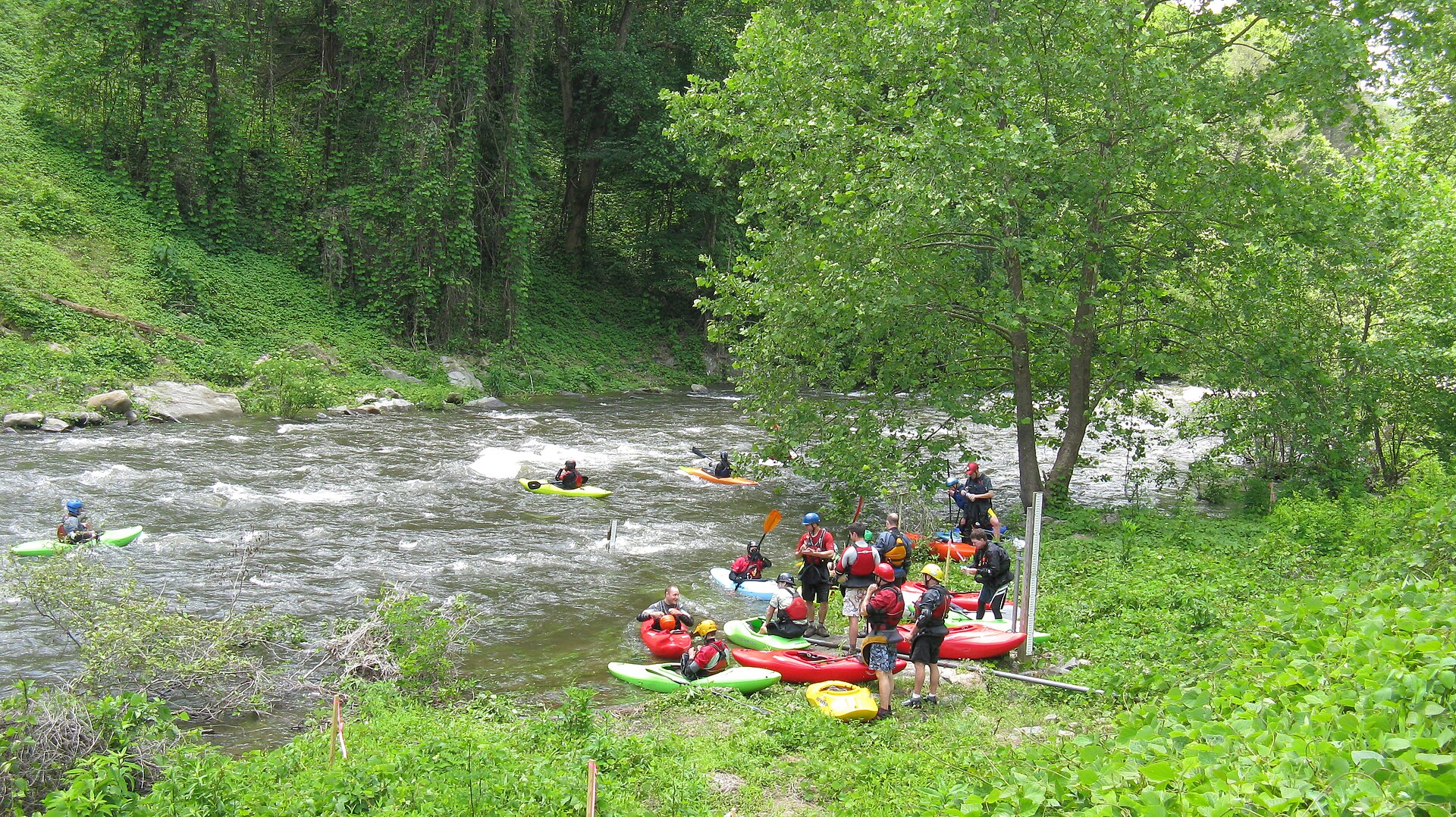
For most of the year, the Cheoah River below Santeetlah Dam runs at a modest base flow, the amount Brookfield Renewable is required to let through for the fish. Roughly 20 days a year, that changes. The dam releases about 1,000 cubic feet per second, and the 9 miles of river down to Calderwood Lake turn into continuous Class IV-V whitewater. No schedule taped to a store window, no guessing. The dates are set a year ahead, and expert paddlers plan their calendars around them.
If you are staying at the lake on a release weekend, you will notice. Robbinsville fills up with roof racks, the pull-offs along US-129 fill up with spectators, and a stretch of river most visitors only ever see as a quiet stream runs as hard as anything in the Southeast.
A river that sat dry for 77 years
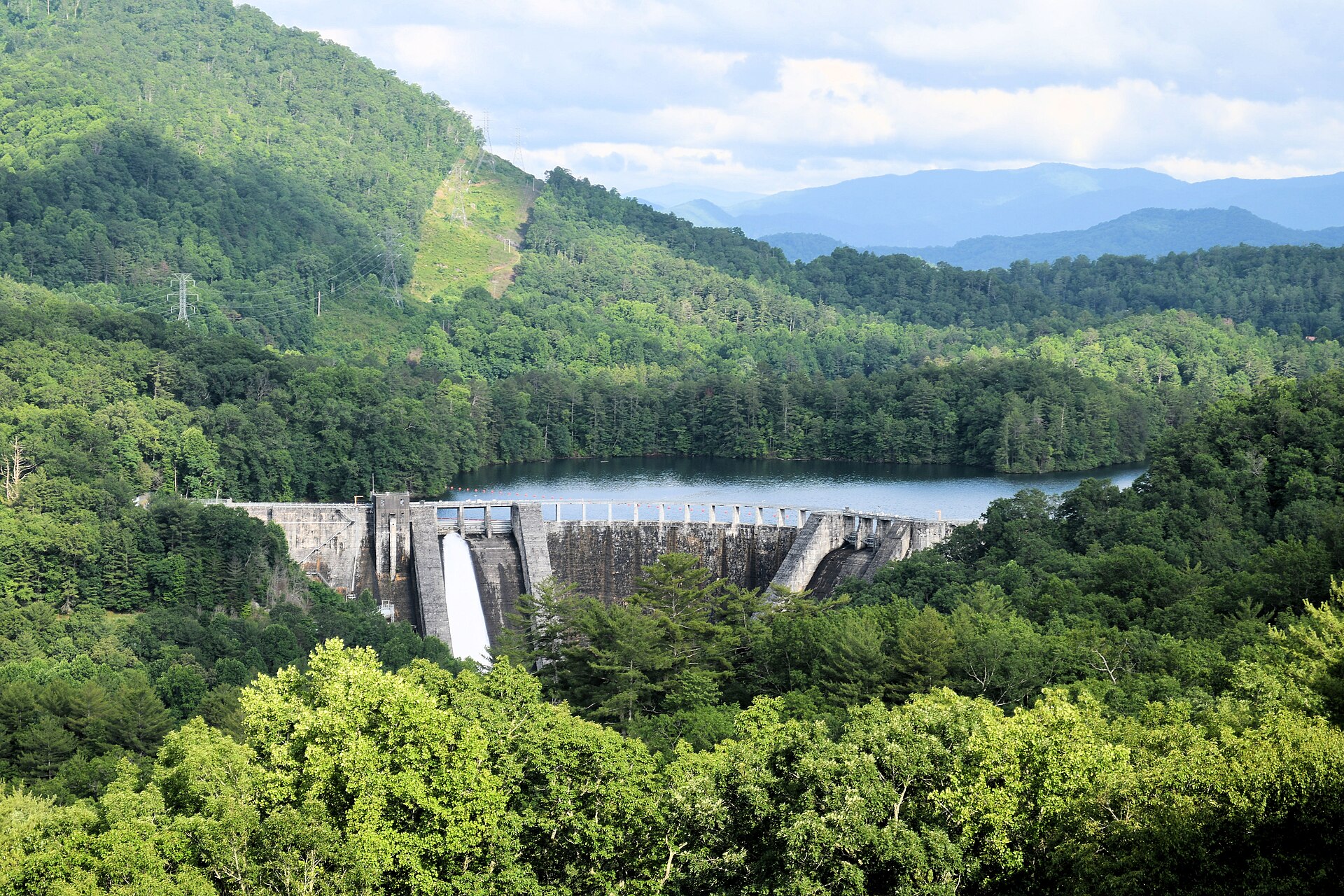
When Santeetlah Dam was finished in 1928, it nearly cut off the Cheoah's natural flow. The water went to power generation, the riverbed went to brush, and the fish that depended on moving water largely disappeared. That lasted until the dam's federal relicensing in the early 2000s. The settlement that came out of it restored year-round base flows and added the big recreational releases, timed to mimic the heavy rain events the river evolved with.
Whitewater releases began in the fall of 2005. The federal license calls for a series of roughly 20 releases a year at 1,000 cfs, and American Whitewater, which helped negotiate them, publishes the calendar each winter. Side creeks add water below the dam, so the gauge near Bear Creek usually reads higher than the release itself.
How the release days run
The standard pattern: Saturdays run 1,000 cfs from 8 a.m. to 4 p.m. Sundays run 1,000 cfs from 8 a.m. to 2 p.m., then step down to 850 cfs until 4 p.m., sometimes with a lower flow tapering into the following day. The season leans spring and fall, with dates scattered from February into November. Recent calendars have clustered weekends in March, April, and May, with additional single days later in the year.
The run itself is 9.25 miles from the put-in below Santeetlah Dam to the boat ramp on Calderwood Lake. The upper river drops about 72 feet per mile. The lower river drops about 91 feet per mile, and one stretch of the lower gorge falls 134 feet in a mile. There is very little flat water anywhere in it.
The rapids people name
- Wilma's Ledge: a river-wide Class IV drop of about 6 feet, with several lines through it.
- Land of Holes: a full mile of continuous whitewater with almost no eddies to rest in. This is the stretch paddlers talk about afterward.
- Bear Creek Falls: a 12-foot drop spanning the width of the river, and the best-known single feature on the run. Spectators gather along US-129 to watch boats go over it.
- The lower gorge: tighter and steeper than the upper river, and it gets harder as the flow rises. Names like Yard Sale tell you what the lower section does to the unprepared.
Guided raft trips cover the nine miles in about 2.5 hours. Private boaters who know the river still treat swims seriously: eddies are scarce, the current does not stop, and a swimmer can be in moving water a long way before reaching the bank.
Who should run it, and who should not
This is not an introductory river, and the outfitters who run it say so plainly. Nantahala Outdoor Center guides trips on the Cheoah, and Outland Expeditions, which meets in Robbinsville, requires rafters to be at least 16 with previous paddling experience. Rafts carry a maximum of four guests and a guide to keep the boat light and maneuverable. The honest framing from every outfitter is the same: they want experienced rafters, because the river demands active paddling and quick reactions, not passengers.
Forest Service rules for release days require a helmet and a Coast Guard-approved life jacket, and only hard-bottom canoes and kayaks or inflatables with at least four air chambers are allowed. The river corridor is a National Forest fee area, so boaters buy a wristband. There is no alcohol allowed within 500 feet of the river on release days.
If your whitewater background is a summer float on the lower Nantahala, the Cheoah is not the next step up. It is several steps up. The reasonable ways in are a guided trip with an outfitter who will vet your experience, or watching from the road first.
Watching counts too
US-129 runs beside the river for most of the run, and on release days dozens of people stop at the pull-offs near Bear Creek Falls to watch. It costs nothing, it explains the river faster than any description, and it is how a lot of people decide whether they ever want to be in a boat on it. Release weekends are also good weekends to be in Robbinsville generally: the town feeds and houses the paddling crowd, and Graham County has backed the release program from the start.
A typical release weekend
| Day | Flow | Hours |
|---|---|---|
| Saturday | 1,000 cfs | 8 a.m. – 4 p.m. |
| Sunday | 1,000 cfs, then 850 cfs | 8 a.m. – 2 p.m., then 2 – 4 p.m. |
The standard pattern for the roughly 20 scheduled releases a year, per American Whitewater. Always check the current calendar before planning around a release.
Keep reading
- How Lake Santeetlah Was Made: The 1928 Dam on the Cheoah River
- The Nantahala River: Rafting the Gorge, the NOC, and 50-Degree Water
- The Lake Santeetlah Drawdown: Why the Lake Drops Each Winter and What It Means for Docks
- Tail of the Dragon: A Driver's Guide from Lake Santeetlah
Common questions
How many Cheoah release days are there each year?
About 18 to 20. The federal license for Santeetlah Dam requires roughly 20 releases a year at 1,000 cfs, and American Whitewater publishes the exact dates each winter.
Can beginners raft the Cheoah River?
No. Outfitters require previous paddling experience and a minimum age of 16, and the river is rated Class IV-V with almost no calm water to recover in.
When do the releases happen?
Mostly on weekends from February through November, concentrated in spring and fall. Saturdays typically run 1,000 cfs from 8 a.m. to 4 p.m.; Sundays step down earlier in the afternoon.